Hot Flashes at Night: How to Manage Them Without Medication
The Hot Flush FilesLast Updated: November 26, 2026
Quick Summary
To manage hot flashes at night without medication, cool your bedroom, cut caffeine and alcohol in the evening, and dress in layers you can shed quickly. When a flash hits, cool your skin fast with a fan, cool water or a damp cloth, then breathe slowly and resettle rather than throwing off all your bedding.
- Identify your personal triggers by removing one at a time for a week.
- Stop caffeine by early afternoon and keep evening meals light and early.
- Keep water and a spare top on the nightstand for fast cooling.
- Cool down first when you wake hot, then resettle without checking your phone.
- Log your symptoms each morning to spot patterns and test one change at a time.
Table of Contents
- Why Hot Flashes at Night Happen (and Why Sleep Feels Impossible)
- What Triggers Hot Flashes at Night
- Bedroom Tips for Menopause Night Sweats
- How to Sleep With Menopause Night Sweats: A Step-by-Step Night Plan
- Cooling Down Fast During a Night-Time Hot Flash
- Herbal Supplements and Natural Remedies: What the Evidence Actually Shows
- Menopause Symptom Tracking: Finding Your Own Pattern
- When Night Sweats Need Medical Evaluation
- Frequently Asked Questions
Why Hot Flashes at Night Happen (and Why Sleep Feels Impossible)
Waking at 3am drenched in sweat is one of the most common ways menopause disrupts sleep. Learning how to manage hot flashes at night without medication starts with understanding why your body's thermostat has gone haywire.
Hot flashes at night, often called night sweats, are sudden surges of heat caused by falling estrogen levels confusing the brain's temperature control centre. Your body thinks it's overheating when it isn't, so it triggers a cooling response: sweating, a racing heart, and a rush of heat.
At UnPause, our AHPRA-registered doctors hear the same story constantly. Women fall asleep fine, then wake soaked and freezing, change their clothes, and lie awake for hours. The cycle repeats. According to the Australian Government's health information on menopause, hot flushes and night sweats are among the most commonly reported menopause symptoms.
The frustrating part? The bedroom becomes a battleground. You dread going to bed because you know what's coming.
If your night sweats strike at a predictable hour, there's a reason. Our article on night sweats at the same time explains why your body runs on a schedule and how to work with it.
What Triggers Hot Flashes at Night
Certain foods, drinks, environments and emotions flip the switch on a night-time hot flash. Identifying your personal triggers is the fastest route to fewer wake-ups.
Most guides list triggers in general terms. We'd rather you find yours. A common mistake is assuming every trigger applies to you, then cutting out everything at once and feeling miserable. In practice, most women have two or three real triggers, not ten.
Food and Drink Triggers After 5pm
What you consume in the evening matters more than lunch. Common culprits include:
- Caffeine after midday, including tea and chocolate
- Alcohol, especially wine, which dilates blood vessels
- Spicy foods at dinner
- Large, heavy meals close to bedtime
- Hot drinks right before bed
Try removing one trigger at a time for a week. That way you'll know what actually matters for you.
Environmental and Emotional Triggers
Your bedroom and your stress levels both play a role:
- A warm room, thick duvet or synthetic sheets
- A hot shower or bath just before bed
- Stress and anxiety, which raise core body temperature
- A rushed evening with no wind-down time
Stress management matters here. Slow, controlled breathing before bed can lower your arousal level and reduce how often a hot flash wakes you.
Bedroom Tips for Menopause Night Sweats
A cooler, layered bedroom reduces both the frequency and severity of night sweats. Small changes to bedding, clothing and airflow often deliver the biggest improvement.
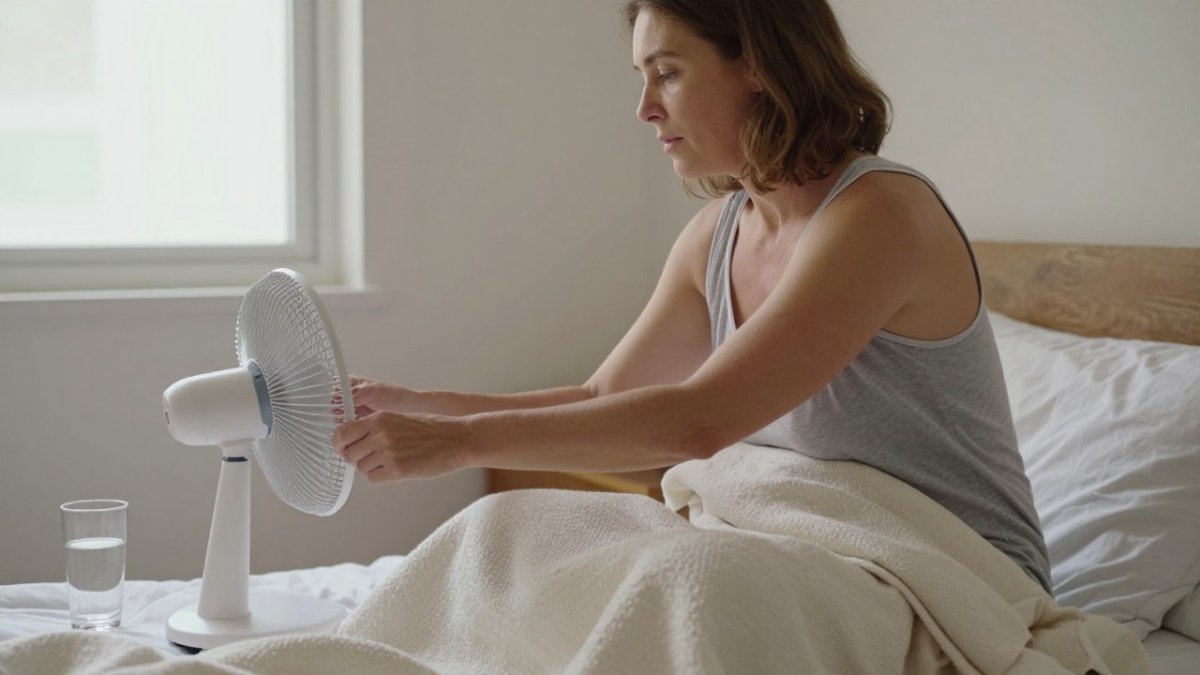
Bedding, Sleepwear and Room Setup
These bedroom tips for menopause night sweats are simple and cheap:
- Lower the room temperature before you get in
- Swap to breathable sleepwear in cotton or bamboo
- Layer bedding so you can remove a layer without fully waking
- Use a fan for moving air, not just a cold room
- Keep a spare set of sheets and sleepwear within reach
- Try a cooling mattress topper or pillow
- Keep water by the bed for hydration after a sweat
The goal isn't a freezing room. It's a room you can adjust in seconds at 3am without a full wake-up.
How to Sleep With Menopause Night Sweats: A Step-by-Step Night Plan
Knowing how to sleep with menopause night sweats comes down to a repeatable evening routine. Build the same sequence each night so your body learns the cues.
Here's the plan we suggest to patients:
- Stop caffeine by early afternoon. Switch to water or herbal tea.
- Eat dinner earlier and lighter. Avoid spicy food and large portions.
- Limit alcohol. If you drink, keep it to one and finish well before bed.
- Cool the bedroom an hour before sleep.
- Take a warm, not hot, shower. A cool-down afterwards helps.
- Do five minutes of slow breathing to settle your nervous system.
- Dress in layers you can shed without thinking.
- Keep water and a spare top on the nightstand.
- If you wake hot, cool down first, then resettle. Don't check your phone.
| Step | What to Do | Why It Helps |
|---|---|---|
| Afternoon | Cut caffeine | Reduces trigger load |
| Dinner | Lighter, earlier meal | Less heat from digestion |
| Evening | Cool the room | Lowers core temperature |
| Pre-bed | Slow breathing | Calms the nervous system |
| Nightstand | Water and spare top | Fast cooling, no disruption |
Cooling Down Fast During a Night-Time Hot Flash
When a hot flash hits, cool the skin quickly and avoid the urge to overcorrect. Fast, calm cooling helps you resettle instead of lying awake.
Try this sequence:
- Push off the covers and let air reach your skin
- Sip cool water
- Apply a cool, damp cloth to your wrists or neck
- Use a fan on a low setting
- Breathe slowly through the flash rather than fighting it
Watch out: throwing off all your bedding in a panic often leaves you freezing ten minutes later, which wakes you again. Cool down, then add one light layer back.
Herbal Supplements and Natural Remedies: What the Evidence Actually Shows
Natural remedies for night sweats are popular, but they are not a substitute for a medical review. The best way to read this section is to treat anything you take as a product with potential effects and potential risks.
Here is a realistic read on the common options:
- **
If your goal is fewer wake-ups rather than fewer products, try one option at a time, give it a fair trial of several weeks, and stop if it is not helping. For a full discussion of treatment options, speak with one of our AHPRA-registered doctors about evidence based HRT treatment options.
Supplement Safety and Medication Interactions
This is the part most guides skip. Herbal supplements are not risk-free, and a product on the shelf is not automatically appropriate for you.
Key safety points:
- Supplements can interact with prescription medicines, so always check with your doctor before starting anything new
- "Natural" does not mean safe for everyone
Always tell your doctor what you are taking, including teas, powders and topical products. If you have a liver condition or take prescription medication, check before starting anything new. Our AHPRA-registered doctors can review your full list, supplements included, during a telehealth consult, and our FAQs explain how prescriptions and ongoing reviews work.
Watch out: stopping a prescribed medicine to "try a natural option" without medical advice can cause more problems than the night sweats themselves. Supplements are an add-on to a plan, not a replacement for one.
Menopause Symptom Tracking: Finding Your Own Pattern
Tracking can turn guesswork into a clearer pattern. Many women find that, after a few weeks of notes, their experience is more specific than they first thought. That difference matters, because it tells you what to change and what to leave alone.
A night-specific log should capture more than "hot flash: yes/no". The detail that makes tracking useful is the context around each episode:
- Time you woke and how long you stayed awake
- What you ate and drank that evening, including the time of your last caffeine or alcohol
- Room temperature, bedding layers and sleepwear fabric
- Stress level that day and whether you had a wind-down period
- Whether you woke hot or cold, and whether you changed clothes or sheets
- What helped, fan, water, cool cloth, breathing, and how quickly you resettled
A few weeks of this can help you see a pattern. Once you can see it, you can test one change at a time rather than overhauling everything at once.
The UnPause Care app can help you keep your log in one place. You can download the UnPause Care app to track your symptoms alongside your care.
A few practical tips for tracking that actually sticks:
- Log in the morning, not at 3am, where practical
- Use the same categories each night so patterns are comparable
- Note the one change you are testing that week, so you can tell whether it worked
- Bring your log to your consult, patterns are easier to act on than single bad nights
A record of your symptoms can give a menopause expert useful information to work with when planning your care. If you would like help interpreting your log, you can book a telehealth consult with one of our AHPRA-registered doctors, and our FAQs explain how ongoing care and reviews work.
When Night Sweats Need Medical Evaluation
Most night sweats are a normal menopause symptom. Some need a doctor's review.
Book a consultation if you notice:
- Sweats so severe they disrupt most nights
- Symptoms that don't improve with lifestyle changes
- Sweats with unexplained weight loss, fever or persistent fatigue
- Symptoms starting suddenly or unusually early
Our AHPRA-registered doctors offer 45-minute video consults and can review your history properly. You can book a telehealth consult with a menopause expert. Our FAQs explain how rebates, prescriptions and ongoing care work.
Ongoing care matters because menopause isn't a one-off event. Symptoms shift over months and years, and a plan that worked last year may need adjusting.
Night sweats don't have to run your sleep. If lifestyle changes aren't enough, our team can help you build an evidence-based plan that fits your history and goals. UnPause offers 45-minute telehealth consults with AHPRA-registered doctors, personalised treatment plans, and ongoing support through the UnPause Care app and Posse membership. Get started with UnPause and take back your nights.
Frequently Asked Questions
How can I stop hot flashes at night without medication?
You can reduce their frequency and severity by identifying your personal triggers, keeping the bedroom cool, wearing breathable sleepwear and using layered bedding you can remove quickly. Avoiding caffeine, alcohol and spicy food in the evening helps many women. Stress management, including slow controlled breathing, also plays a role. These measures lower the number of hot flashes at night for some women but do not eliminate them entirely. If symptoms keep disrupting your sleep, speak with an UnPause menopause expert about whether non-hormonal or hormonal treatment is appropriate for you.
What is the best bedroom temperature for night sweats?
Most sleep guidance suggests keeping the bedroom cooler than the rest of the home, and many women find a noticeably cooler room helps. The right number varies between individuals, so test a few settings over a week and note the results in the UnPause Care app. Pair a cooler room with a fan for air movement, breathable cotton or bamboo bedding, and layers you can remove without fully waking. A cooler bedroom is one of the most practical bedroom tips for menopause night sweats.
What should I avoid before bed if I get hot flashes?
Caffeine, alcohol and spicy foods are the most commonly reported triggers for hot flashes at night. Try to finish caffeinated drinks by early afternoon, limit alcohol in the evening and eat spicy meals earlier in the day. A heavy meal close to bedtime and a warm bedroom can also set off a flush. Keep a simple record of what you ate and drank and how your sleep went, so you can see which triggers actually affect you rather than cutting out foods you do not need to avoid.
When should I talk to a doctor about night-time hot flashes?
Book an appointment if night sweats are happening most nights, are soaking your bedding or sleepwear, or are affecting your work and mood. Also seek review if they started suddenly, come with unexplained weight loss, fever or palpitations, or if you are bleeding again after 12 months without a period. An UnPause doctor can assess your symptoms, rule out other causes and discuss evidence-based options, including non-hormonal approaches and MHT, in a 45-minute video consultation.

More from the blog
How Long Does MHT Take to Improve Sleep?
The Hot Flush FilesWondering how long MHT improve sleep? Most women see early changes within weeks, with full benefits over months. Learn the timeline and track progress.
Night Sweats at the Same Time: Why Your Body Has a Schedule
The Hot Flush FilesNight sweats at the same hour each night follow your body's 24-hour temperature rhythm. Learn why falling estrogen triggers them and how to sleep cooler.
How to Talk to Your Doctor About Memory Lapses
The Hot Flush FilesMemory lapses can be worrying. Learn how to prepare for a doctor appointment, what to say, and which questions to ask about memory changes.