Night Sweats at the Same Time: Why Your Body Has a Schedule
The Hot Flush FilesLast Updated: November 22, 2026
Quick Summary
Night sweats happen at the same time every night because your body runs on a 24-hour circadian rhythm that controls temperature, and falling estrogen unsettles the hypothalamus, the brain's thermostat. This pushes the cooling response to surface at the same predictable point in your sleep cycle each night.
- Your body temperature drops in the evening and rises in the early hours, so symptoms cluster at the same time nightly.
- Estrogen helps keep the hypothalamus steady; fluctuating levels make the brain misread small temperature changes as overheating.
- Alcohol, some antidepressants, steroids and pain medicines can all trigger night sweats.
- Keep the bedroom cool, choose light cotton bedding and loose moisture-wicking sleepwear to reduce disruption.
- Book a doctor if sweats soak your bedding most nights or come with fever or unexplained weight loss.
Table of Contents
- Why Night Sweats Happen at the Same Time Every Night
- Perimenopause Night Sweats: The Hormonal Link
- Common Causes of Night Sweats Beyond Hormones
- How to Stop Night Sweats: Practical Steps That Help
- Night Sweats: When to See a Doctor
- What a Menopause Expert May Ask or Investigate
- Book Your Initial Consult with UnPause
- Frequently Asked Questions
Why Night Sweats Happen at the Same Time Every Night
Waking at 3am in a pool of sweat, night after night, is one of the most disorienting symptoms of the menopause transition. The short answer: your body runs on a 24-hour internal schedule, and when hormonal changes disturb the thermostat in your brain, the disruption tends to surface at the same point in your sleep cycle each night.
Night sweats are episodes of heavy sweating during sleep that leave your bedding or sleepwear soaked, often without the room being hot. They differ from simply feeling warm: the sweating is sudden, drenching, and usually followed by a chill as your body cools down.
Below, we explain why the timing is so predictable, what else can cause it, and how to track it properly.
How Your Body Thermostat and Circadian Rhythm Interact
Your body temperature does not stay flat overnight. It follows a daily rhythm controlled by your circadian rhythm, dropping in the evening to help you fall asleep and rising again in the early hours before you wake.
The body thermostat sits in a part of the brain called the hypothalamus. It works with your circadian rhythm to keep core temperature within a narrow range. When the hypothalamus gets a signal that you are too warm, it triggers sweating and widened blood vessels to release heat.
In the early hours, core temperature is already shifting. That is why vasomotor symptoms like night sweats often cluster at the same time each night. Your thermostat is being pushed at a predictable point in its daily cycle, so the response is predictable too.
Here is how the body's daily temperature rhythm explains the predictable timing of night sweats.
| Factor | What happens | Effect on night sweats |
|---|---|---|
| Circadian rhythm | Body temperature drops in the evening and rises in the early hours | Symptoms cluster at the same time each night |
| Body thermostat | Sits in the hypothalamus and keeps core temperature in a narrow range | Triggers sweating and widened blood vessels when it reads overheating |
| Estrogen | Helps keep the thermostat steady | Falling and fluctuating levels unsettle the hypothalamus |
| Progesterone | Usually works as a pair with estrogen to keep things calm | When it falls, temperature control becomes less stable |
Perimenopause Night Sweats: The Hormonal Link
Perimenopause night sweats happen because falling and fluctuating estrogen levels unsettle the hypothalamus. Estrogen helps keep the thermostat steady. When levels swing, the brain misreads small temperature changes as overheating and launches a cooling response, even in a cool room.
Progesterone matters too. It usually works as a pair with estrogen to keep things calm, as we explain in your hormones explained simply. When progesterone falls, that calming effect fades and temperature control becomes less stable.
The result is a sudden flush of heat, sweating, and sometimes a racing heart, followed by a chill. At night, this can wake you from deep sleep, which is why so many women describe exhaustion alongside the sweats.
Common Causes of Night Sweats Beyond Hormones
Hormones are the most common cause in your 40s and 50s, but they are not the only one. If your night sweats are new, severe, or come with other symptoms, it is worth ruling out other causes. For a broader look at how night sweats fit with other symptoms, see our guide to menopause symptoms in midlife women.
Medications, Alcohol and Underlying Conditions
Several everyday factors can trigger night sweats:
- Medication side effects: some antidepressants, steroids and pain medicines list sweating as a side effect. Changing the timing of a dose can sometimes help, but only under medical advice.
- Alcohol use: alcohol widens blood vessels and disrupts sleep stages, making sweats more likely.
- Anxiety: stress can amplify the body's heat response.
- Infections: fever and night sweats can accompany infections.
- Underlying conditions: thyroid problems, some autoimmune disorders and autonomic neuropathy can all cause sweating.
If you are taking a prescription medicine and notice night sweats after starting it, note the timing and raise it with your doctor rather than stopping it yourself.
How to Stop Night Sweats: Practical Steps That Help
You cannot switch off the hormonal cause with a fan, but you can reduce how often night sweats disrupt your sleep. Start with your sleep environment and daily habits.
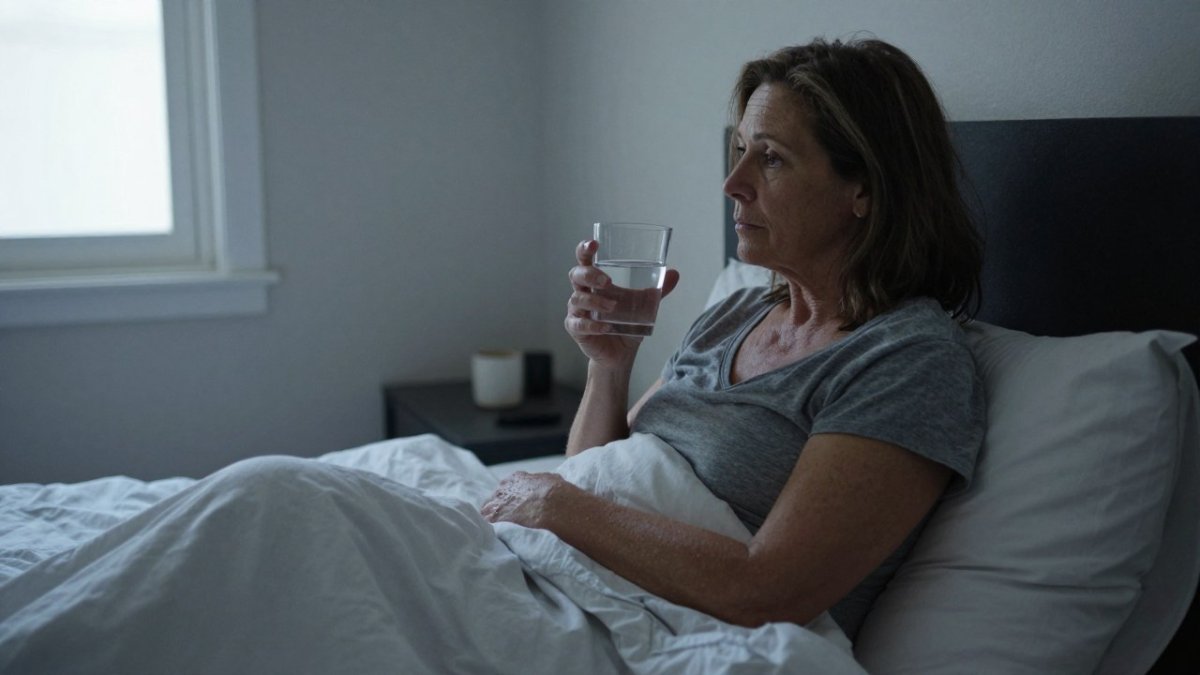
- Cool the room: keep the bedroom cool and well ventilated.
- Choose breathable bedding: light cotton layers beat heavy quilts.
- Dress for it: loose, moisture-wicking sleepwear helps.
- Watch alcohol and spicy food in the evening.
- Keep water by the bed to rehydrate after an episode.
- Track the pattern so you can spot triggers.
If lifestyle changes are not enough, evidence-based treatment options such as MHT can help. That is a conversation to have with a doctor who knows your history.
Tracking Timing and Triggers with the UnPause Care App
A simple log is the fastest way to see what is driving your night sweats. Note the time you wake, what you were wearing, the room temperature, what you ate or drank, and your stress level that day.
The UnPause Care app can help you keep this record in one place.
Night Sweats: When to See a Doctor
Most night sweats are not dangerous, but some patterns need medical advice. Book a doctor if you notice:
- Sweats that soak your bedding most nights
- Fever, unexplained weight loss, or feeling generally unwell
- Swollen glands or a persistent cough
- Sweats that started with a new medicine
- Symptoms that are getting worse over time
If you are unsure how UnPause works, including Medicare rebates, our FAQs cover the details.
What a Menopause Expert May Ask or Investigate
A menopause expert will start with your history. Expect questions about when the sweats began, how often they happen, and what makes them better or worse.
Your doctor may also ask about your menstrual cycle, medicines, alcohol use, stress and family history. Depending on your answers, they may arrange a physical examination or tests to rule out other causes. The goal is to confirm whether hormonal changes are the likely driver and to build a plan that fits your history and goals.
Book Your Initial Consult with UnPause
Night sweats that follow the same clock every night are your body telling you something is out of balance. You do not have to keep guessing.
At UnPause, our AHPRA-registered doctors offer 45-minute video consultations and personalised treatment plans. You can book your initial consult with UnPause and get clear answers from a team that listens.
If night sweats are disrupting your sleep and your days, it is worth getting a proper assessment rather than pushing through. UnPause connects you with AHPRA-registered doctors who take a full history and build an evidence-based plan around your symptoms and goals, with 45-minute video consults and ongoing support through membership.
Frequently Asked Questions
Why do I wake up with night sweats at the same time every night?
Your body runs on a circadian rhythm that controls temperature, and core temperature follows a predictable overnight curve, dipping in the early hours. When hormonal changes make your thermostat more sensitive, the same trigger point each night can set off sweating at a similar time. Room conditions, bedding and the timing of medication or alcohol can reinforce that pattern. You can record your episodes in the UnPause Care app to help you notice whether the timing is consistent.
Can perimenopause cause night sweats at the same time each night?
Yes. Perimenopause night sweats are a common vasomotor symptom, and fluctuating estrogen affects how your brain regulates temperature. Many people notice episodes clustering in the early hours because that is when core temperature is already at its lowest point in the sleep cycle. If episodes are drenching, disrupt sleep stages or come with palpitations, it is worth discussing with a doctor. UnPause's AHPRA-registered doctors can review your history and talk through evidence-based options, including MHT where appropriate.
How can I tell if night sweats are caused by menopause or something else?
Look for context: menopause-related night sweats usually sit alongside other changes such as irregular periods, hot flashes, mood shifts or sleep disruption, and they tend to be recurring rather than one-off. Causes of night sweats can also include medication side effects, alcohol use, anxiety, infection or an underlying condition. A fever, unexplained weight loss or sweats that started suddenly after a new prescription need medical review. Bring a written record of frequency, duration and timing to your appointment so a clinician can assess the full picture.
When should I talk to a doctor about night sweats?
Seek medical advice if night sweats are drenching your clothes or bedding most nights, disrupting sleep and daytime function, or occurring with fever, unexplained weight loss, a new medication or a known medical condition. If you are over 40 and noticing other perimenopause symptoms, an assessment can confirm what is driving them. UnPause offers 45-minute video consultations with AHPRA-registered doctors who can build a personalised plan, with Medicare rebates available.

More from the blog
How to Talk to Your Doctor About Memory Lapses
The Hot Flush FilesMemory lapses can be worrying. Learn how to prepare for a doctor appointment, what to say, and which questions to ask about memory changes.
How to Understand Menopause Memory Loss and Brain Fog
The Hot Flush FilesMenopause memory loss is common but often misunderstood. Learn why brain fog happens, how long it lasts, and what helps from UnPause's doctors.
HRT Monitoring Tests and Follow-Up Appointments Explained
The Hot Flush FilesHRT monitoring explained: when follow-up appointments happen, which blood tests are routine, and what to ask your menopause expert at each review.