7 Facts About HRT and High Blood Pressure You Need
The Hot Flush FilesLast Updated: November 1, 2026
Quick Summary
Yes, many women can take HRT and high blood pressure need not rule it out, provided your blood pressure is well controlled and a doctor reviews your full history first. The decision depends on how stable your readings are, which type of HRT you use, and whether you have other heart or clot risks.
- Uncontrolled hypertension is the real concern, so get readings reviewed and stabilised before adding hormones.
- Transdermal estrogen is often preferred when blood pressure or clot risk is part of the picture.
- Gather a week of home readings taken morning and evening before your initial consult.
- Check readings again in the first few weeks of treatment, when small fluctuations can occur.
- Call your doctor before stopping or changing HRT because of a single high reading.
Table of Contents
- Can You Take HRT If You Have High Blood Pressure?
- Does HRT Raise Blood Pressure? What the Evidence Shows
- Controlled Versus Untreated Hypertension: Why It Changes the Conversation
- Transdermal HRT and Blood Pressure: Why the Route Matters
- HRT Blood Pressure Monitoring: What to Track and When
- Questions to Ask Your Doctor About HRT Before You Start
- Book Your Initial Consult With an UnPause Menopause Expert
- Frequently Asked Questions
Can You Take HRT If You Have High Blood Pressure?
Yes, many women can take HRT and high blood pressure need not rule it out, provided their blood pressure is well controlled and a doctor reviews their full history first. The answer is not a flat yes or no.
At UnPause, our AHPRA-registered doctors assess exactly these factors before recommending any treatment.
That matters, because the conversation around HRT and high blood pressure has shifted. Below, we break down what the evidence shows, why the route of delivery changes things, and the questions worth asking before you start.
Does HRT Raise Blood Pressure? What the Evidence Shows
For most women, hormone therapy does not cause a lasting rise in blood pressure. Some people see small changes in their readings, particularly in the first few months. Others see no change at all.
The bigger picture is that blood pressure tends to climb naturally through the menopause transition, whether or not you take HRT. So a rise in your readings is not automatically down to the hormones.
There are a few things worth knowing:
- Blood pressure can fluctuate in the early weeks of treatment as your body adjusts.
- Some formulations affect readings more than others, which is why the route you choose matters.
- Existing high blood pressure needs managing first. Uncontrolled hypertension is the real concern, not HRT on its own.
For a fuller look at what the research actually says about hormone therapy, read our guide to menopause hormone therapy and what the science says.
Controlled Versus Untreated Hypertension: Why It Changes the Conversation
Controlled hypertension and untreated hypertension are not the same thing, and lumping them together is where a lot of bad advice comes from. If your blood pressure is stable and well managed, with or without medication, you are generally in a much stronger position to discuss HRT.
The distinction matters because the risk sits with the hypertension, not with the hormones.
What counts as controlled?
Your own blood pressure target should come from your treating doctor, because it varies with your history. What matters for the HRT conversation is not one number but the pattern:
- Controlled: readings sit at or below your target, either through lifestyle changes or antihypertensive medication, and stay consistent over weeks and months.
- Untreated or uncontrolled: readings remain above target, treatment has not started, or current medication is not doing the job.
- Stable versus unstable: even treated hypertension needs to be steady. Big swings in your readings need review before starting hormones.
A common mistake is assuming one high reading at a stressful appointment rules out HRT forever. It does not. What matters is the pattern over weeks and months, which is exactly what a proper assessment looks at.
A practical pathway before you start
If you have high blood pressure and are considering HRT, work through these steps in order. They are the same steps an UnPause doctor will take you through in an initial consult.
- Gather recent readings. Aim for a week of home readings taken morning and evening, plus any clinic readings from the last few months. A single reading is not enough to judge control.
- Review your current medicines. Bring a list of everything you take, including blood pressure medication, supplements and any other hormones. Some interactions and some formulations need adjusting around your existing treatment.
- Note your cardiovascular history. Previous clots, stroke, heart disease, migraines with aura, smoking status and family history all change the risk picture and belong in the conversation.
- Check whether your blood pressure needs review first. If your readings are consistently above target, the sensible sequence is to get that reviewed and stabilised before adding hormones.
- Ask about the route. Transdermal estrogen is often preferred when blood pressure or clot risk is part of the picture, and that is a discussion to have before a prescription is written.
If your readings are consistently high and you have symptoms such as chest pain, severe headache, shortness of breath or visual changes, seek urgent care rather than waiting for a routine appointment.
Why the control status changes the decision
The evidence on HRT and blood pressure is reassuring for most women, but it is not a blank cheque. What the research can tell us is that hormone therapy does not cause a lasting rise in blood pressure for most people.
At UnPause, our AHPRA-registered doctors assess exactly these factors before recommending any treatment, and our guide to menopause hormone therapy and what the science says sets out the evidence in more detail.
Transdermal HRT and Blood Pressure: Why the Route Matters
Transdermal HRT, delivered through a patch or gel, is one route your doctor may consider when blood pressure or clot risk is part of the picture.
Oral HRT is still widely used. Your doctor will weigh the route against your full medical history.
Here is how the routes compare in practice:
| Route | How It's Taken | Often Considered When |
|---|---|---|
| Transdermal | Patch or gel through the skin | Blood pressure or clot risk is a concern |
| Oral | Tablet swallowed daily | No specific cardiovascular risk factors |
| Vaginal | Local low-dose treatment | Vaginal dryness or urinary symptoms only |
The oestrogen and progestogen combination also matters.
If you have high blood pressure and want to understand the treatment options in more depth, our guide to evidence-based HRT treatment options walks through what is available.
HRT Blood Pressure Monitoring: What to Track and When
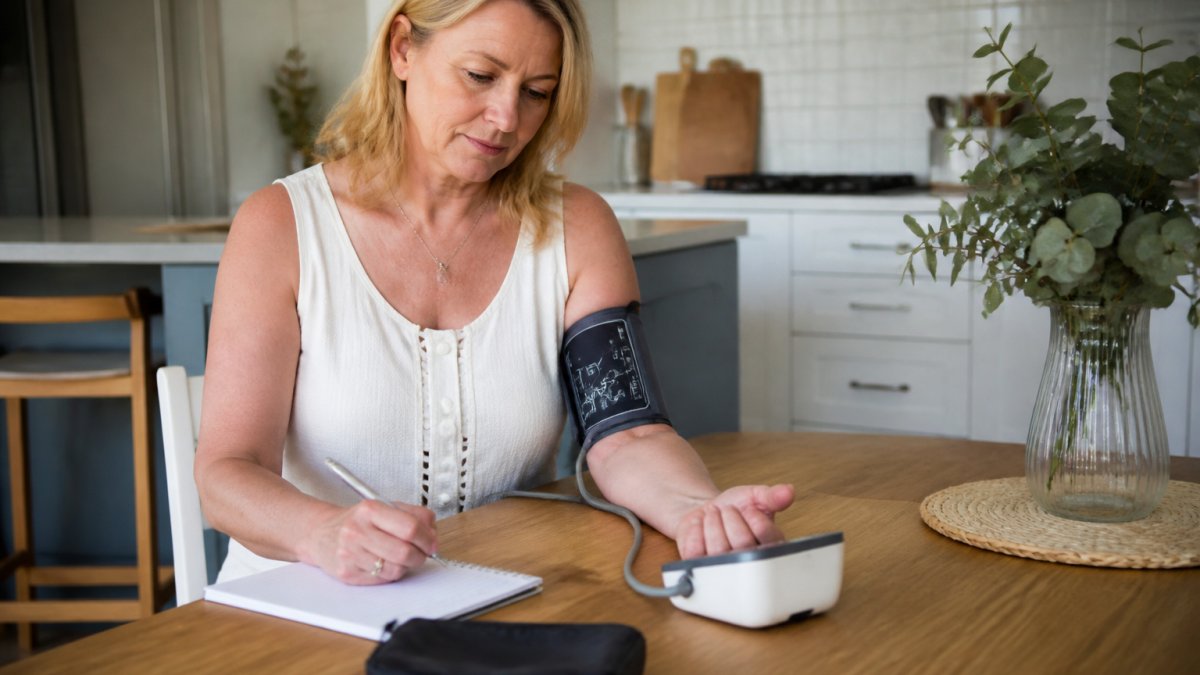
Monitoring your blood pressure during HRT is straightforward, and it gives you and your doctor real data to work with. Check your readings before you start, then again at regular intervals once treatment begins. The aim is not to create anxiety about every number, but to catch a meaningful change early enough to act on it.
When to check
A practical schedule that most clinicians find workable looks like this:
- Before starting: a week of home readings, morning and evening, plus any recent clinic readings.
- Early treatment: check again in the first few weeks, when some people see small fluctuations as the body adjusts.
- Ongoing: a few readings a week is usually enough once things are stable, with a more concentrated week before each review.
- After any change: if your dose, route or formulation changes, repeat a week of readings so the effect is visible.
How to take a reading that is worth recording
- Sit quietly for five minutes before measuring
- Take readings at the same time each day, ideally morning and evening
- Use a validated upper-arm monitor and a correctly sized cuff
- Record the top and bottom numbers plus your pulse
- Note any symptoms alongside the reading, such as headaches or dizziness
- Bring your log to every appointment
The UnPause Care app makes this simple. You can log symptoms, track readings and manage prescriptions between consults, so nothing gets lost in the gap between appointments.
When a reading should prompt a call
A single high reading is not usually a reason to panic, and it is not a reason to stop your HRT on your own. What matters is the pattern. Contact your doctor if:
- your readings climb consistently above your target over a week or more
- your readings swing widely between checks
- you develop new headaches, dizziness or visual changes alongside higher readings
- you are unsure whether a reading is accurate and want it reviewed
Call your doctor before stopping or changing your HRT because of a single high reading.
Urgent symptoms need urgent action
Some symptoms should never wait for a routine appointment. Seek immediate care for chest pain, sudden severe headache, shortness of breath, or swelling or pain in one leg. These can signal a clot or heart event. If you are unsure, err on the side of getting checked.
What the evidence can and cannot tell you
The research supports monitoring as a sensible safety habit, but it cannot predict how any individual woman will respond to hormone therapy. Age, cardiovascular history, smoking status and other risk factors all affect the decision, which is why a personalised plan and regular review matter more than any single guideline. Our guide to evidence-based HRT treatment options walks through how route and formulation fit into that plan, and our team of doctors and clinicians page explains the qualifications behind the care you receive.
Questions to Ask Your Doctor About HRT Before You Start
A good consultation should leave you with clear answers, not more confusion. Bring these questions to your appointment and write down the responses.
- Is my blood pressure controlled, and does it need review before I start HRT?
- Would transdermal HRT suit me better than an oral tablet?
- Which oestrogen and progestogen combination fits my history?
- How often should I check my blood pressure once I start?
- What symptoms should prompt me to call you straight away?
- How will we review whether the treatment is working?
If you have a uterus and are weighing up your options, our step-by-step guide on how to discuss HRT with your doctor is worth reading before your appointment.
Urgent symptoms need urgent action. Seek immediate care for chest pain, sudden severe headache, shortness of breath, or swelling or pain in one leg. These can signal a clot or heart event and should never wait for a routine appointment.
Book Your Initial Consult With an UnPause Menopause Expert
The right answer for your blood pressure and your hormones comes from a proper conversation, not a generic rule.
An initial consult runs for 45 minutes by video, so you can talk through your blood pressure, your symptoms and your options without feeling rushed.
You do not need to accept "just put up with it" as an answer. Book your initial consult with an AHPRA-registered UnPause doctor and get a plan built around your actual health picture.
High blood pressure does not automatically close the door on HRT, but it does mean the decision deserves proper review.
References:
- Therapeutic Goods Administration guidance on hormone therapy products
- healthdirect Australia information on blood pressure
- Medicare services and rebates
Frequently Asked Questions
Can I take hormone replacement therapy if I have high blood pressure?
In many cases, yes, but it depends on how well your blood pressure is controlled and your overall cardiovascular risk. If your hypertension is stable on treatment, a menopause expert can assess whether HRT is appropriate for you. If your blood pressure is untreated or uncontrolled, the priority is getting it managed first. A clinician will review your medical history, blood pressure readings and risk factors before recommending a treatment plan.
Is transdermal HRT safer than tablets for blood pressure?
Transdermal HRT and blood pressure have been studied closely, and patches or gels are often preferred for people with cardiovascular risk factors. Your doctor will weigh the route against your full medical history rather than applying a one-size-fits-all rule.
Should blood pressure be controlled before starting HRT?
Yes, in most cases clinicians want to see stable, well-controlled blood pressure before starting hormone therapy. Untreated hypertension adds to cardiovascular risk, and starting HRT without addressing it makes treatment decisions harder to assess. Bring recent blood pressure readings to your consultation so your doctor can review them alongside your symptoms and history.
What should I ask my doctor before taking HRT with hypertension?
Ask whether your blood pressure is controlled enough to start, which HRT route suits your risk profile, how often to monitor your readings, and what symptoms should prompt urgent review. Also ask how HRT might interact with any antihypertensive medication you take. UnPause consultations run for 45 minutes so there is time to work through these questions with an AHPRA-registered doctor.

More from the blog
Understanding Perimenopause Symptoms in Your 40s?
The Hot Flush FilesPerimenopause symptoms in your 40s can start subtly. Learn the early signs, how they may change over time, and when to speak with a doctor about them.
Is Perimenopause Treatment Covered by Insurance?
The Hot Flush FilesWondering if perimenopause treatment is covered by insurance? Learn how Medicare, private health insurance and telehealth rebates apply to your care.
7 Steps to Improve Focus During Perimenopause
The Hot Flush FilesImprove perimenopause focus with 7 practical steps, from sleep fixes to symptom tracking. Learn what helps brain fog and when to see a doctor.